
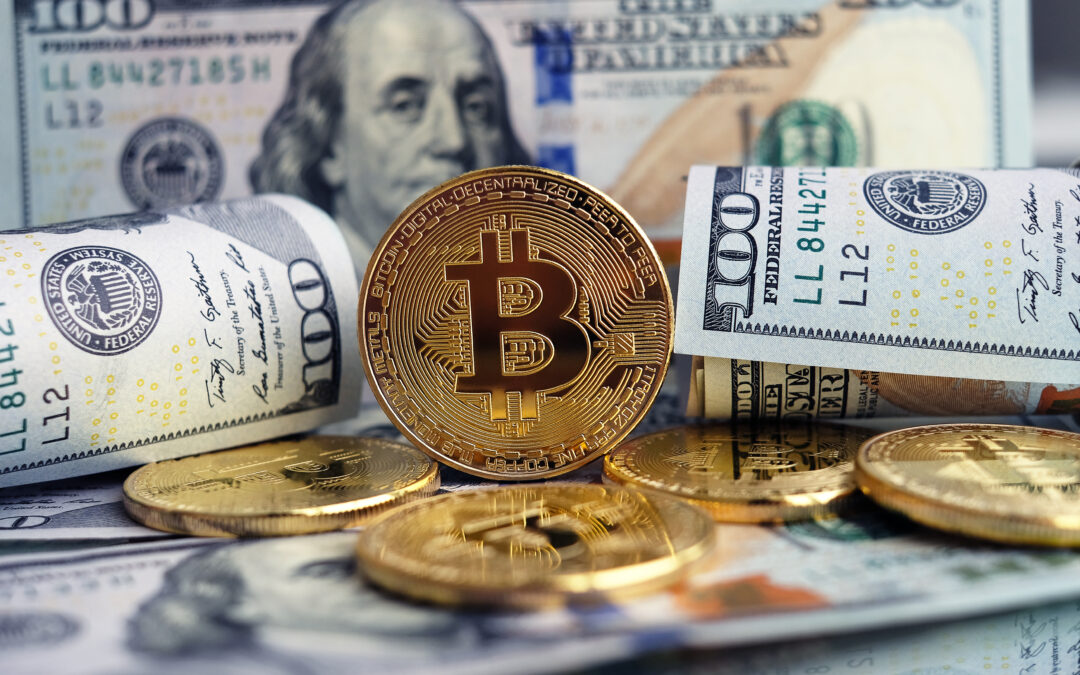
As we move deeper into 2025, many people are wondering: “Why does it feel like everything’s getting more expensive — even though wages are supposed to be recovering?” The truth is, while the economy is showing pockets of strength, rising costs and shifting monetary policy are squeezing households more than many realize. Against this backdrop, the debate over Bitcoin’s role as a modern safe haven is only intensifying.
Volatility Keeps Undermining Its Safe-Haven Pitch
Bitcoin’s supporters often describe it as a modern equivalent to precious metals, but its price behavior continues to tell a different story. Large intraday swings and reactions to global uncertainty make it difficult for households or investors to view it as a stable place to store wealth. In periods of market turbulence, gold typically steadies — but Bitcoin frequently moves in the opposite direction, reinforcing doubts about its reliability in crises.
Institutional Interest Isn’t Settling the Argument
Big banks, asset managers, and ETFs have accelerated adoption, giving Bitcoin more legitimacy than ever before. Yet institutional involvement has also increased its correlation with broader markets. When stocks fall, Bitcoin often follows, blurring the line between hedge and risk asset. Instead of proving it behaves like digital gold, Wall Street’s embrace has highlighted just how intertwined it has become with traditional financial cycles.
Scarcity Alone Hasn’t Cemented Its Status
Bitcoin’s fixed supply is one of its core selling points, but scarcity by itself doesn’t guarantee resilience. Investor psychology, geopolitical tensions, and regulatory announcements still outweigh mathematical constraints when it comes to short-term performance. As a result, its value feels more tied to momentum than fundamentals — a dynamic that limits its ability to serve as a predictable store of value.
2025 Leaves the Question Unanswered
Even with increased adoption, Bitcoin remains at a crossroads. It functions as a speculative asset, a technological experiment, and a potential inflation hedge — but not consistently as any one of them. Until its price stabilizes and its behavior becomes more uniform during economic shocks, its claim to being “digital gold” will remain unsettled.